

We’d buy a proxy of our favorite commander from a different shop than we’d choose for the other 99 cards. On a single we see every game, the color of an old frame or the glint of a holo stamp is worth paying attention to. Multiply that premium by a hundred and we’d much rather put the money toward a second deck.
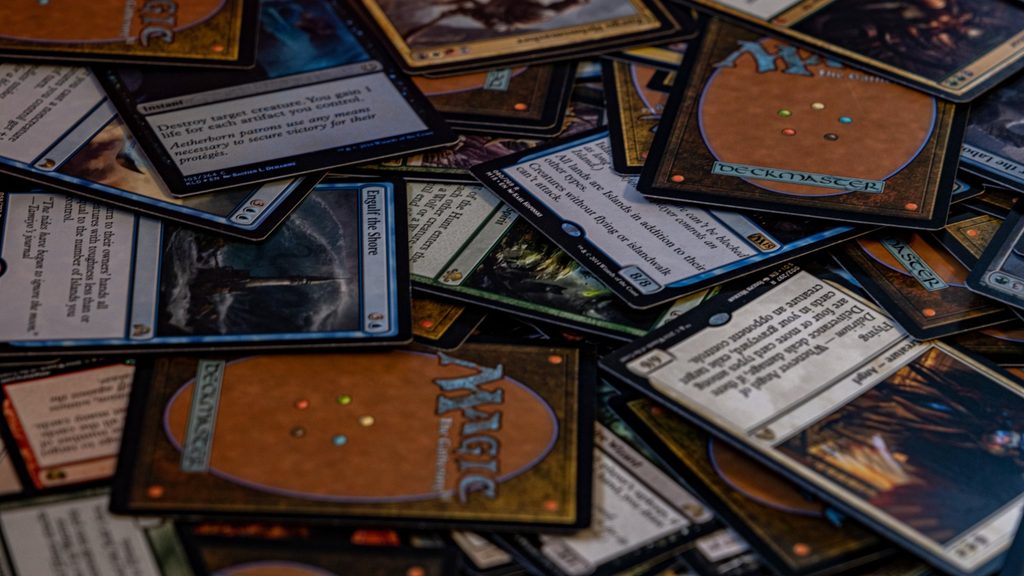
That distinction shaped our ranking of the best MTG proxy companies for 2027. We looked at the cards themselves, what it costs to order a useful quantity, and how much work stands between a deck idea and a playable stack. We also included a few specialists. Someone who wants four carefully finished dual lands, someone who wants tokens featuring the family dog, and eight friends looking to split the cost of a draft have good reasons to shop in different places.
The Best MTG Proxy Companies at a Glance
- PrintMTG · Best overall for complete decks, custom cards, and fast delivery.
- ProxyFoundry · Close runner-up and our pick for bulk decklists.
- ProxyKing.biz · Best physical quality for premium singles.
- PrintACube · Best value for a ready-made draft Cube.
- MakePlayingCards with MPCFill · Best for choosing your own stock, finish, and card backs.
- QP Market Network · A good fit for original card projects and repeat print runs.
- Underground Sea · Worth checking for a particular newer foil or hard-to-find printing.
- ProxyPrintery · Flexible imports and specialty finishes for European buyers.
- PrintingProxies · Convenient ordering, but the weakest cards in our direct comparison.
How We Compared the Companies
Our four-way hands-on comparison covered PrintMTG, ProxyFoundry, ProxyKing.biz, and PrintingProxies. Their published 2026 review records account for 655 cards across nine orders. We considered fine artwork, small rules text, color, surface texture, edges, corners, and how the cards handled in sleeves. The specialist reviews below identify where the evidence came from a separate order or an assessment of the available printing options.
Color was particularly revealing. PrintMTG’s cards looked bright and clear. ProxyKing’s colors looked the most natural beside official cards. PrintingProxies tended toward a darker, more saturated result. Those are observations from the cards we handled. For a buyer, they’re more useful than two sellers both describing their work as “high resolution.”
Our overall ranking also considers the order you can actually place. Can you paste a list, choose a particular printing, add a double-faced card, or design a matching token without rebuilding the project? What does the cart cost at 100 cards? MTG Proxy Reviews’ published weighted scores put ProxyFoundry at 4.7/5 and PrintMTG at 4.3/5. In this buying guide, PrintMTG’s card maker and its first-arriving package give it the narrow editorial win. The physical cards were that close.
1. PrintMTG | Best Overall
PrintMTG’s two published test orders covered 300 cards. Clarity was its strongest visual quality. The artwork looked bright, small rules text stayed readable, and the cards sat evenly in a stack. We noticed the difference immediately alongside PrintingProxies. Against ProxyFoundry, picking a winner was much harder. We could lay out cards from both shops and find examples we preferred from each.
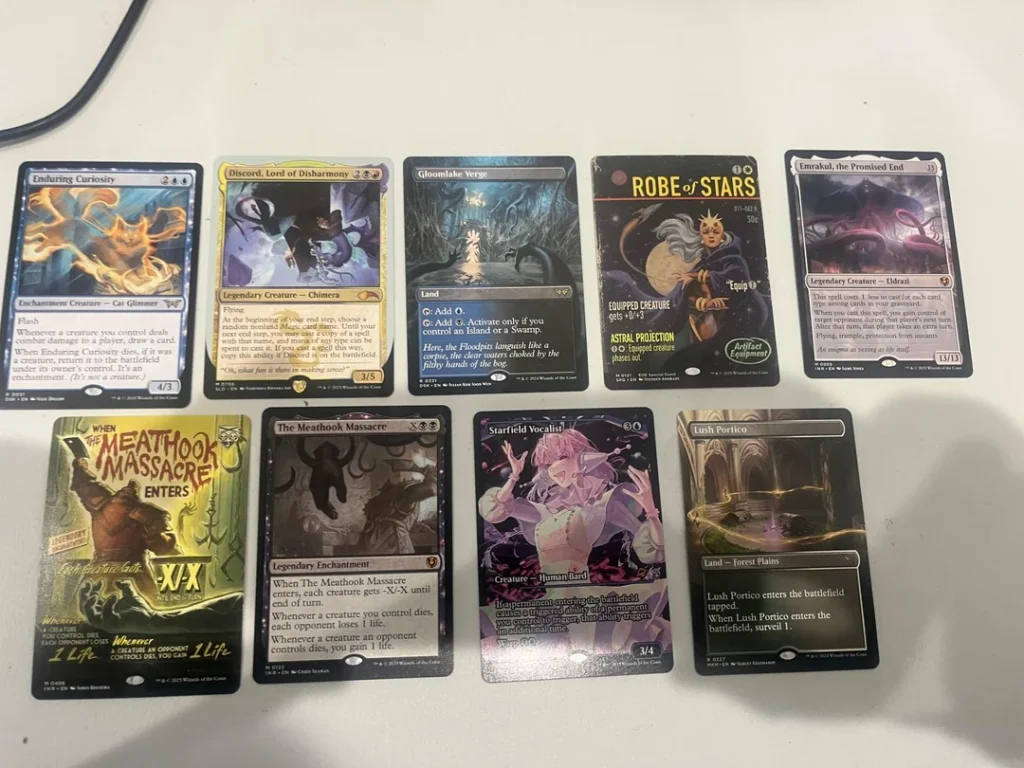
The card maker is where PrintMTG earns first place. Suppose you want to give a friend a Commander deck with their dog illustrated as the commander. You can look up the underlying card, load its text, upload the portrait, and reposition the art inside the frame. Then you can make the tokens that commander creates and import the rest of the deck from a list. You spend your design time on the handful of cards that make the gift personal.
PrintMTG’s package also reached us first. None of the four directly compared shops took an especially long time, so speed alone wouldn’t settle the ranking. It does settle a practical question: if we had a custom deck to finish before an upcoming game night and liked both printers’ cards, we’d start at PrintMTG.
2. ProxyFoundry | Best for Bulk Decklists
ProxyFoundry’s newer cards showed a noticeable improvement over its earlier samples. The artwork held more detail, and the stock felt better in hand. Its published review covered 200 cards from two orders. Picking up one of those cards next to a more expensive ProxyKing single, we were struck by how little the surface texture gave away. We had to look at the art and finishing details to see where ProxyKing pulled ahead.
The gap between ProxyFoundry and PrintingProxies was much bigger. Both reproduced the oval stamp as part of the printed image on the samples we checked. Both cut their cards to a shape reasonably close to an official card. Yet ProxyFoundry resolved substantially more of the artwork. In an opaque sleeve, the difference in surface texture becomes less important. The difference on the face is still there every time you draw the card.
One reviewed ProxyFoundry order worked out to $0.33 per card. That was the effective price on that purchase. For another point of reference, the October 2026 review recorded a 500-card quote of $190 before shipping and tax. This is where we’d take several finished Commander lists or a personally curated Cube. Across several hundred cards, we’d rather put the money toward another playable deck than pay a singles premium for each card.
3. ProxyKing.biz | Best Physical Quality and Premium Singles
ProxyKing made our favorite individual cards. The colors looked the most natural to our eyes, and the cuts looked and felt identical to the official cards we compared. Its lead over ProxyFoundry in resolution was slight. What set it apart was getting the color, detail, shape, and surface right on the same card. The published review covered 55 cards from three orders and gave ProxyKing full marks for printing, construction, and cutting.
The holo stamp was an easy difference to see. The relevant ProxyKing samples had a reflective stamp that caught the light. The ProxyFoundry and PrintingProxies samples reproduced the oval as a flat printed detail. For a full Commander deck, we’d happily take the printed treatment. For the one card sitting face up in the command zone every game, we can see why someone would spend more.
Consider Underground Sea, the dual land. ProxyKing listed both a Beta version and a Revised version at $4 each. If you’re building an old-border Cube and have a clear preference about which version should appear in a pack, that’s a sensible purchase. If you need a blue-black land to test whether your mana base works, adding one to a larger print order costs much less.
4. PrintACube | Best Ready-Made Draft Cube
PrintACube solves a problem familiar to anyone who has volunteered to organize a draft. Eight people want to play, but someone still has to choose, source, and sort several hundred cards. A ready-made Cube takes the first two jobs off that person’s list. You can look through the actual creatures, spells, and lands before buying, which tells you more about a draft environment than the word “Modern” on the box.
The 360-card Modern Cube was listed at $75. That gives eight players three 15-card packs apiece, or about $9.38 per seat for the cards on the first draft. Shuffle them up and the group can play again next week. The 540-card version was $100. An eight-person group drafting 360 of those cards leaves 180 out each time, giving regulars more variety for an additional $25.
If you’ve spent months tuning your own Cube, a low price on someone else’s list buys the wrong thing. We’d take that personal list to ProxyFoundry or PrintMTG. If the group’s goal is simply to sit down and draft a good environment, the $75 option is one of the easiest recommendations in this roundup.
5. MakePlayingCards With MPCFill | Best for Custom Backs and Stock Choices
MakePlayingCards manufactures the cards. MPCFill is a separate tool that helps assemble a project for it. The combination makes sense for a themed Cube with a common illustrated back, a set of original tokens, or a large batch of alternate-art cards. This placement reflects its production choices and ordering workflow. The published MPC assessment did not include a new inspected order.
Here’s what the extra control asks of you. For its 63 × 88 mm cards, MPC calls for 300 dpi artwork, an eighth of an inch of bleed, and another eighth of an inch inside the trim for important content. On a borderless illustration, let the scenery run beyond the cut while keeping the name, mana cost, and power and toughness inside that safe area. On a double-faced card, check that the right reverse is paired with the front. That is a small task once. Across 360 images, it becomes a meaningful part of the project.
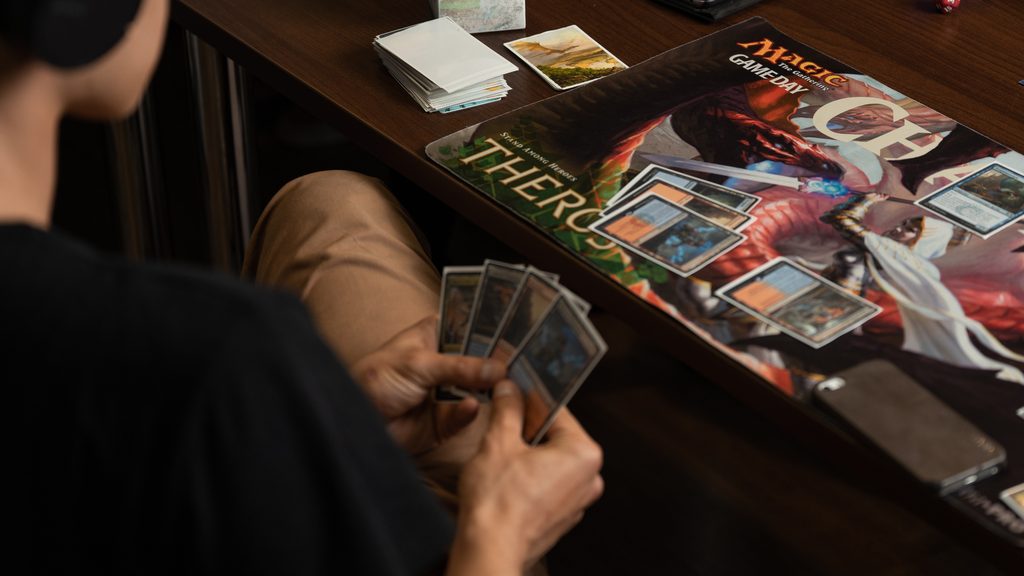
Compare the delivered quote for the stock, finish, and destination you intend to use. A low production price can disappear into overseas shipping. We’d take on the extra preparation for a distinctive card back or a finish we couldn’t get elsewhere. For a conventional list going into ordinary sleeves, PrintMTG and ProxyFoundry make the process easier.
6. QP Market Network | Best for an Original Card Project
QP Market Network is a case where we liked opening the package considerably more than waiting for it. MTG Proxy Reviews inspected one 200-card order. The images printed well, the cuts were among the best in that comparison, and the pricing was attractive. The stock itself felt ordinary. Getting an answer and getting the package both took longer than the reviewer wanted.
QP is more interesting for a creator producing an original card game, a token line, or a prototype that might need several runs. It offers print-on-demand fulfillment and storefront integrations, capabilities that become useful when you plan to send decks to other people. For a player who needs one Commander list printed by the weekend, those features add little. We’d choose QP for a repeatable project where clean cuts and unit cost matter more than the first delivery date.
7. Underground Sea | Worth a Look for a Specific Foil Printing
Underground Sea, also called USea, produced the widest range of results inside one package. The 25-card review order contained newer examples with crisp artwork, better-feeling stock, and an attractive finish. Some older cards felt like a lower-grade product altogether. You could photograph two cards out of that shipment and come away with entirely different impressions of the company.
That makes USea a specialist worth knowing about. If you want a particular etched-foil treatment and can identify the version in the listing, there’s a reason to look. If you’re filling a cart with unrelated cards from a dozen releases, that variability becomes more expensive. For a handful of showcase cards we wanted to match visually, ProxyKing was the more dependable choice.
8. ProxyPrintery | Flexible Imports for European Buyers
ProxyPrintery gives buyers several ways to avoid redoing work. You can bring in a list from Moxfield or Archidekt, specify tokens separately, or import an XML file from a project you’ve already assembled in MPCFill. Partial foil is the more unusual draw. For a custom commander or matching token set, it lets you plan a design around only selected parts catching the light.
The company advertised TCG-core cards from €0.56 when we checked. For a European buyer, the useful comparison is the actual quote for the paper, finish, quantity, and shipping address. The October review recorded customer reports of delayed orders and uneven communication. Given those reports, we’d try the specialty finish on a small job before trusting the shop with an entire Cube needed for a specific date.
9. PrintingProxies | Convenient Ordering, Disappointing Cards
Texture was the first giveaway. The surface felt rough under a fingertip, especially after handling the smoother ProxyFoundry and ProxyKing cards. Put the card in a sleeve and the texture matters less. The color difference stays with you. Our PrintingProxies samples looked dark and oversaturated, while PrintMTG looked clear and bright. ProxyFoundry resolved substantially more of the image. The published PrintingProxies review covered 100 cards from two orders.
The printed oval stamp wouldn’t put us off on its own. ProxyFoundry used a similar treatment on the cards we compared and still finished near the top. Shipping was reasonable, too. The problem was paying more for cards we liked less. At the standard tiers in the October comparison, a 100-card order cost $45 more here than at PrintMTG. At 500 cards, the gap grew to $185. We’d keep the savings and take the clearer artwork.
What Different Proxy Orders Actually Cost
These are merchandise prices recorded in October and November 2026. Shipping, tax, and upgrades can change the delivered total. A ready-made Cube includes the shop’s selected list, so it buys something different from printing the same number of handpicked cards.
| Example order | Company | Card subtotal |
|---|---|---|
| One Revised Underground Sea proxy | ProxyKing.biz | $4 |
| 100 standard cards from your list | PrintMTG / PrintingProxies | $55 / $100 |
| 500 standard cards from your list | PrintMTG / ProxyFoundry / PrintingProxies | $190 / $190 / $375 |
| 360-card ready-made Modern Cube | PrintACube | $75 |
| 540-card ready-made Modern Cube | PrintACube | $100 |
Where We’d Place Our Next Order
For a first Commander deck, we’d order from PrintMTG. The cards looked good, the package arrived first, and we could add a custom commander or matching tokens without preparing a second order. For a playgroup combining several finished lists, we’d pick ProxyFoundry. Once the artwork and versions are settled, its print quality and bulk pricing are hard to pass up.
For four cards we expect to see every game, we’d pay the premium at ProxyKing. And if eight friends had a table, a free Saturday, and no Cube, we’d split the $75 PrintACube order. That last purchase comes to less than ten dollars a person for a draft the group gets to keep.
A Quick Word on Using Proxies
Before you shuffle up, talk to your playgroup. “Hey, I’m trying a few cards before I buy them. Everybody good with proxies?” is usually all it takes. If the whole deck is proxied, say that too. It’s easier to have that conversation while everyone’s choosing decks than halfway through turn four.
It’s also worth mentioning what the deck actually does. A proxy of a dual land because you’d rather spend that money elsewhere is one thing. A deck packed with fast mana and turn-three combos is a different game for the table. If everyone else brought a lightly upgraded precon, the most useful heads-up is how fast your deck can win.
For sanctioned tournaments, leave your own proxies at home and bring the official cards. Some unsanctioned events welcome proxies, so check the event listing or ask the organizer before you register. And if a good-looking proxy ever leaves your deck, make sure the next person knows what it is. Nobody should have to guess what they’re trading for.
https://magic.wizards.com/en/news/announcements/proxies-policy-and-communication-2016-01-14
Sources and Test Notes
- MTG Proxy Reviews testing methodology
- PrintMTG hands-on review and published quantity pricing and shipping threshold
- ProxyFoundry test orders and bulk pricing
- ProxyKing hands-on review and dual-land catalog prices
- PrintACube’s 360-card Modern list and product details
- MakePlayingCards game-card specifications and MPCFill project builder
- QP Market Network’s 200-card review
- Underground Sea’s 25-card review
- ProxyPrintery’s advertised options and starting price and October 2026 review